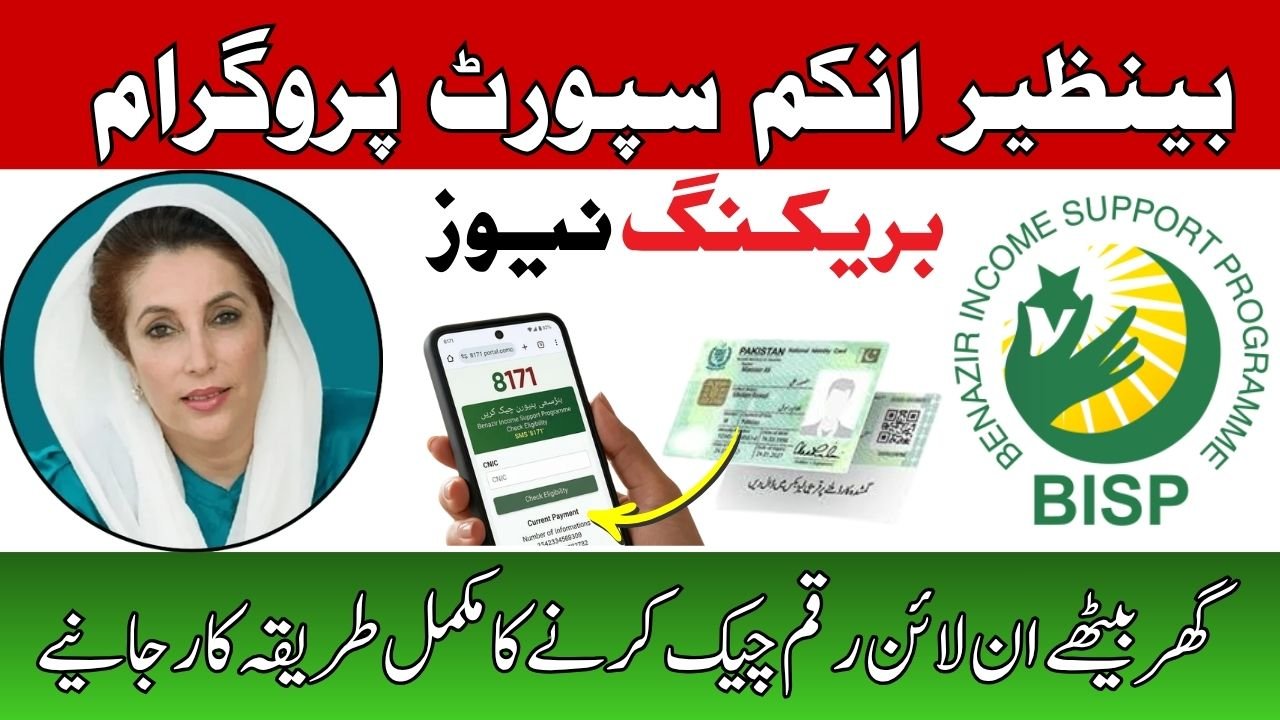
8171 Web Portal June 2026
The Government of Pakistan, through the Benazir Income Support Programme (BISP), has officially announced the rollout of the next phase of financial assistance for deserving families. Beneficiaries across the country can now verify their eligibility and payment status as conditional and unconditional cash transfers are actively being processed for the June 2026 cycle.
The current payment phase includes the regular Benazir Kafalat quarterly stipend along with additional educational and health-related assistance under associated welfare initiatives.
8171 Web Portal June 2026 Payment Released
The payment disbursement mechanism is being strictly monitored to ensure complete transparency and secure delivery of funds to eligible households. The June 2026 distribution mainly covers the Benazir Kafalat quarterly installment for low-income families registered under the National Socio-Economic Registry (NSER).
Beneficiaries who recently updated their socioeconomic information through the NSER dynamic survey are receiving payments through:
- Designated partner banks
- BISP biometric campsites
- Authorized payment retailers
- Specialized district-level payment centers
The government has emphasized biometric verification to prevent fraud and unauthorized withdrawals.
How to Check BISP 8171 Eligibility Online
The Government of Pakistan has simplified the verification process to help beneficiaries check their payment status from home without visiting BISP offices.
Step 1: Access the Official 8171 Web Portal
Visit the official BISP 8171 portal using your mobile phone or computer browser.
Step 2: Enter Your CNIC Number
Carefully type your 13-digit Computerized National Identity Card (CNIC) number without spaces or dashes.
Step 3: Complete Captcha Verification
Enter the alphanumeric captcha code displayed on the screen to confirm secure access.
Step 4: View Payment Status
After submitting the information, the system will display your:
- Eligibility status
- Payment confirmation
- Registration details
- Survey verification status
BISP Programs & June 2026 Stipend Structure
Below is the latest breakdown of financial assistance distributed under various BISP initiatives:
| Program Initiative | Distributed Amount | Core Eligibility Requirement |
|---|---|---|
| Benazir Kafalat | Rs. 13,500 Per Quarter | Verified PMT Score through NSER |
| Benazir Taleemi Wazaif | Rs. 750 – Rs. 3,000 | Minimum 70% School Attendance |
| Benazir Nashonuma | Specialized Health Stipend | Pregnant/Lactating Women & Infants |
Benazir Kafalat Program June 2026 Update
The Benazir Kafalat Program remains the largest cash transfer initiative under BISP. Eligible families are receiving Rs. 13,500 quarterly assistance to support essential household expenses including food, education, and healthcare.
Only households meeting the updated PMT score criteria after the NSER survey are considered eligible for continued payments.
offichal website ; https://bisp.gov.pk/
Benazir Taleemi Wazaif Payments
The Benazir Taleemi Wazaif initiative continues to support children from low-income families by providing educational stipends.
Eligibility Conditions
Children must:
- Be enrolled in a registered school
- Maintain at least 70% attendance
- Belong to an active BISP Kafalat household
Payment amounts vary according to the student’s educational level.
Benazir Nashonuma Program Assistance
The Benazir Nashonuma Program provides nutritional and healthcare support for:
- Pregnant women
- Lactating mothers
- Infants and young children
The program aims to reduce malnutrition and improve maternal health in economically vulnerable households.
Essential Requirements for New Registration
Families whose records are inactive or unavailable on the portal must complete the latest registration verification process.
Required Documents
Applicants must visit the nearest BISP registration center with:
- Original CNIC
- Children’s B-Form issued by NADRA
- Registered mobile number
NSER Dynamic Survey
A fresh NSER dynamic survey will be conducted to evaluate:
- Household income
- Family size
- Living conditions
- Poverty Means Test (PMT) score
The updated information will determine future eligibility for financial assistance.
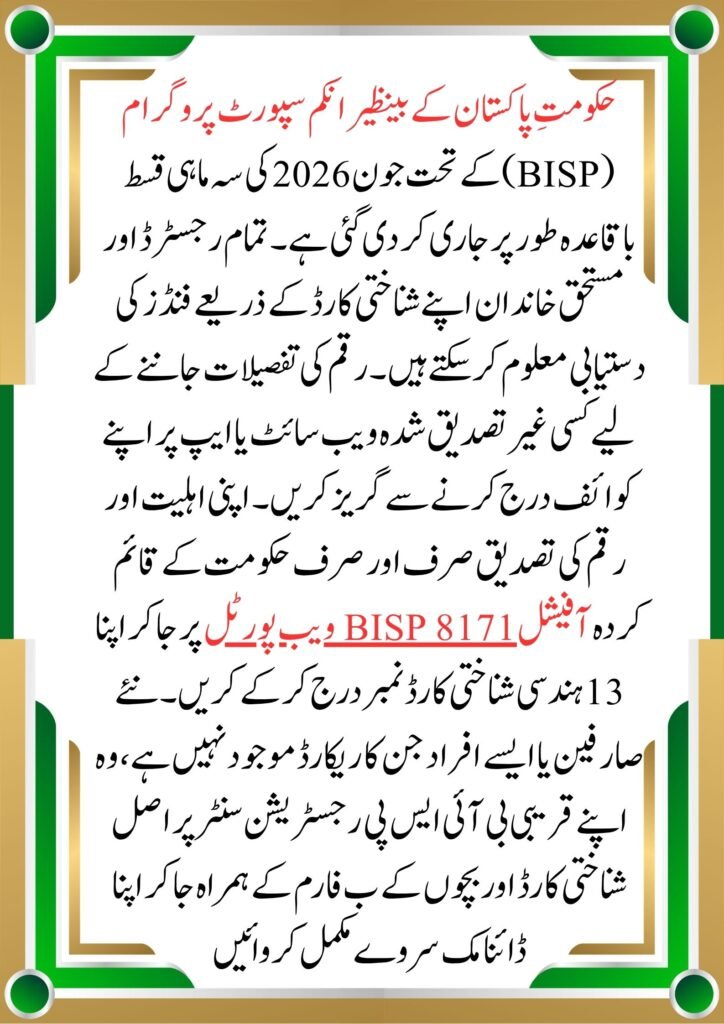
Important Instructions for Beneficiaries
To avoid fraud and delays, beneficiaries should follow these important guidelines:
- Never share CNIC details with unauthorized agents
- Use only official BISP channels
- Complete biometric verification personally
- Keep registered mobile numbers active
- Report illegal deductions immediately
All official BISP services are free of charge.
Common Reasons for Payment Delays
Some beneficiaries may experience temporary delays due to:
- Expired CNIC
- Incomplete NSER survey
- Biometric mismatch
- Incorrect family records
- PMT score changes
Updating personal information at official centers can help resolve these issues.
Frequently Asked Questions (FAQs)
Q1: Is there any fee required to check the payment status on the 8171 portal?
No. All services provided through the official 8171 web portal and SMS service are completely free. Do not pay any fees to agents or third parties.
Q2: What does “No Record Found” mean on the portal?
This usually indicates that your household information is outdated or your NSER dynamic survey has not been completed. You must visit a BISP registration center for record updates.
Q3: Can I collect my June 2026 payment without biometric verification?
No. Biometric verification is mandatory to ensure secure payment delivery and eliminate fraudulent withdrawals.
Q4: Can new families apply for BISP in 2026?
Yes. Eligible low-income households can apply by completing the NSER dynamic survey at their nearest BISP office.
Final Words
The 8171 Web Portal June 2026 payment release marks another important step in Pakistan’s ongoing social protection efforts. Through transparent digital verification systems and biometric payment methods, the government aims to ensure that financial assistance reaches deserving families efficiently and securely.
Beneficiaries are advised to regularly check their payment status through official BISP platforms and keep their NSER records updated to avoid interruptions in future installments.